The Promise Walkthrough: West World Guide
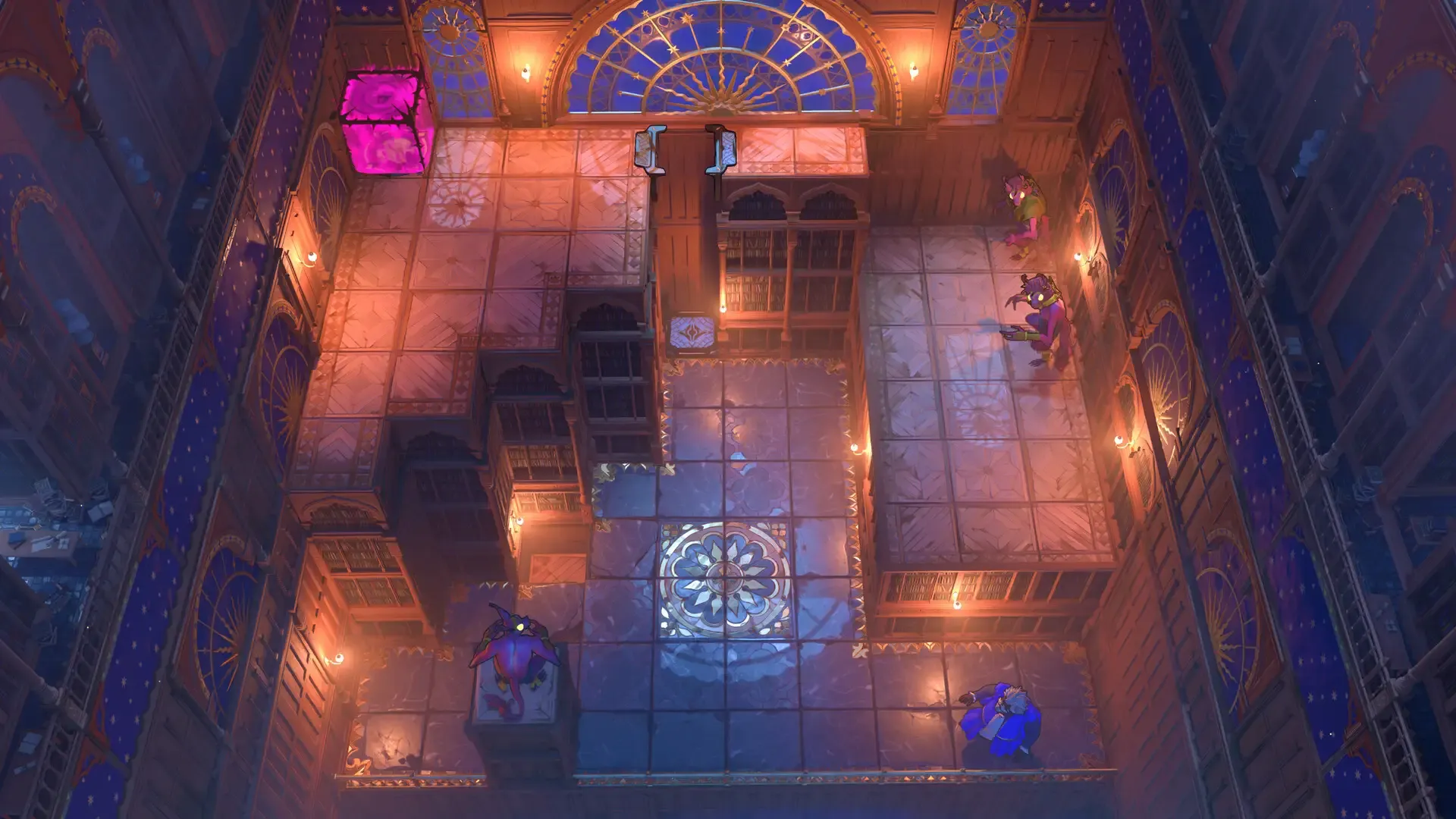
The Promise walkthrough: channel colored light beams through giant gems for phasing, boulder smashing and long teleports, and combine beams to clear paths.
FAQ
What is The Promise in Order of the Sinking Star?
What abilities do the gem light beams unlock?
Which color gives which ability in The Promise?
Why do I need more than one beam powered at once?
Is The Promise playable in the demo?
Quick Answer
The Promise is the western realm of the Overworld in Order of the Sinking Star. You play a solitary Explorer working through vast subterranean cavern networks, using giant gems to channel colored light beams that unlock dynamic abilities. The developers name three effects the beams produce: phasing through solid walls, smashing boulders and long-distance teleports. The stated key is to watch how beam colors open opportunities in distant environments, and to understand that clearing a blocked path requires the right combination of beams powered simultaneously.
Official source: New Trailer – Explore the Realm (Steam news, September 23, 2026)
Where the other realms give you a party or a boat, this one gives you a lamp and a very large cave. The puzzle is rarely the obstacle in front of you. It is usually the thing the beam is doing three rooms away.
What Is The Promise Realm?
The west route of the Overworld goes underground. The Explorer works alone, the setting is described as vast, subterranean cavern networks rather than a single dungeon, and the in-fiction objective is to extract precious gems. That scale is load-bearing: if the beams only affected the room you were standing in, the realm would be a series of locked doors. Because they reach across distance, the caverns behave as one connected system.
Official material credits Promesst 1-3 by Sean Barrett as part of the design lineage, described as “An abstract grid-puzzler about exploring a cave filled with mysterious beams of light.”
Official source: Order of the Sinking Star official FAQ
This is the one lineage claim in the game that you have to reach by inference rather than read off a sentence. No source found says “the west is based on Promesst” directly. What supports it is the match between the official description of Promesst — a cave filled with mysterious beams of light — and everything the developers say about The Promise, plus Game File’s report that lists the north and west as based on “Ostroff’s Heroes of Sokoban trilogy and Sean Barrett’s Promesst series” in that order. Treat the mapping as press-supported and indirect: highly likely, but not a statement anyone made outright. The same report confirms the foundation games were licensed with permission.
Giant Gems and Colored Light Beams
The mechanic is channeling. A giant gem takes light and sends it along a direction. Beams have a color, and the color is not cosmetic: it determines what the beam does when it lands somewhere.
That gives the realm two layers of reading. The first is tracing the beam path through the cavern, including any reflections or splits along the way. The second is reading the color at the destination and understanding which ability it has just made available. The developers are explicit that the interesting half is the second one: watch how beam colors open opportunities in distant environments.
The Three Named Abilities
The developers named the effects, and the list is short enough to hold in your head. What they did not publish is which color produces which effect.
| Named ability | What it does | Shape of the obstacle it answers |
|---|---|---|
| Phasing through solid walls | Lets the Explorer pass through solid geometry | A route that exists but is walled off |
| Smashing boulders | Breaks boulders that block the way | A corridor plugged by heavy rock |
| Long-distance teleports | Moves the Explorer across a large gap | A cavern the Explorer cannot walk across |
Official source: New Trailer – Explore the Realm (Steam news, September 23, 2026)
| Reported color | Reported ability | Status |
|---|---|---|
| Green | Phasing through walls | Reported by one preview source, unconfirmed |
| Blue | Pushing or smashing boulders | Reported by one preview source, unconfirmed |
| Yellow | Unknown — the original preview text is truncated | No usable information |
Note the small discrepancy worth flagging honestly: the developers say the beams enable smashing boulders, while the preview source describes the blue ability as pushing them. Those may be the same effect described loosely, or two different things. There is no official source that resolves it before launch.
The Real Key: Combinations Powered Simultaneously
The second half of the developer guidance is the one that changes how you solve rooms. Clearing a blocked path requires the right combination of beams powered simultaneously.
This is a stronger constraint than it first appears. If abilities were independent, you could light one beam, use its ability, and move on. Combination gating means the state of the cavern is global: what matters is which set of beams is active at the same moment, not which beams you have ever lit. Turning one beam off to light another can close the opportunity you were about to use.
Practically, this makes note-taking useful. When a cavern shows you a blocked path you cannot open yet, the productive question is which colors the path seems to want, not which gem you have not tried. The answer is usually a set, and lighting that set may require routing light from elsewhere in the network.
Hazards: Solid Walls, Boulders and Gaps
The hazards in The Promise are the things the three abilities exist to defeat, and the developers name them in the same breath as the abilities. That makes them easy to plan around, because the obstacle in front of you announces which ability answers it.
| Hazard | What it does | The ability that answers it |
|---|---|---|
| Solid walls | Block a route that exists on the grid | Phasing through solid walls |
| Boulders | Plug a corridor with heavy rock | Smashing boulders |
| Long gaps | Separate two parts of a cavern network | Long-distance teleports |
The subtler hazard is the global beam state. Because paths open on a combination of beams powered simultaneously, a room can be unsolvable not because you lack an ability but because lighting the ability you need forces you to turn off a beam that something else depends on. That dependency, rather than any single wall, is what makes the west the most stateful of the four realms.
From 2D to 3D: What Changes Later
Press reporting notes a progression that matters more here than anywhere else: early puzzles in the game work on a 2D plane, while later puzzles are 3D. A realm built entirely on lines of light through a cavern is a natural place for that shift to bite, because a beam path stops being a line you can trace on flat paper and becomes something you have to read in volume.
The same reporting explains why the game is top-down and tile-based at all — the developers needed a shared structure that let four very different puzzle games be combined into one map. The grid is the common language, and the third dimension is what they add once that language is established.
Demo and Pre-Launch Status
The Promise is in the demo, but only as a single level. The free demo launched on June 15, 2026 and was expanded by the Demo Part 2 update on June 19, 2026, and its playable worlds are the northern Hauling world, the eastern Mirror Isles, and the west’s one Promise level. The Gaming Outsider’s demo review describes the western region as containing only one level and calls it the longest single puzzle in the demo, and IGN’s preview confirms the same shape. The south is a different story: Skipping Stones to Lonely Homes is not in the demo at all, which those same two outlets and the creators.gg demo campaign brief each confirm. The Steam store page for the demo describes its contents only as “a selected portion of the game”.
Where The Promise Connects to the Rest of the Overworld
The western realm is half of the first Gold Room pairing the developers named. Clearing a Gold Room bridges two realms and unlocks the six large dual-combination areas, and the official example for this world is direct: the Explorer’s light beams meet the Trader’s magic mirrors. Two systems that both work at a distance, aimed at each other, is exactly the kind of interaction the Overworld is built to produce.
For the route structure around the four realms, start with the Overworld map guide and then read Gold Rooms explained. The beam rules, including the combination requirement, are laid out in more detail on the gem light beam and colour abilities page.
Related
Related Articles
guides
Order of the Sinking Star Achievements Guide
Steam confirms Order of the Sinking Star has achievements, but no list is public before launch. What is confirmed, what is not, and what to expect on October 8.
puzzles
Gem Light Beams and Colour Abilities in The Promise
How giant gems and coloured light beams work in the western caves, the three abilities the developers name, and why the colour-to-power mapping is still unconfirmed.
worlds
Heroes of Hauling Walkthrough: North World Guide
North world walkthrough for the Hearty Heroes of Hauling: the six-hero moving company, push, pull and teleport abilities, and how to chain them.
Was this helpful?
Thanks for the feedback!